


Trailer Interchange vs. Bobtail Insurance in Georgia: What’s the Difference?
If you own or operate a commercial truck in Georgia, you may have heard the terms trailer interchange insurance and bobtail insurance.
But what do they actually cover?
Although both are common in the trucking industry, they provide protection for very different risks.
At Jones Group Insurance Services, we help truckers, owner-operators, and trucking companies in Acworth, Kennesaw, Marietta, Canton, Woodstock, Atlanta, and throughout Georgia understand their commercial trucking insurance options.
Here's what you should know about trailer interchange and bobtail insurance.
What Is Trailer Interchange Insurance?
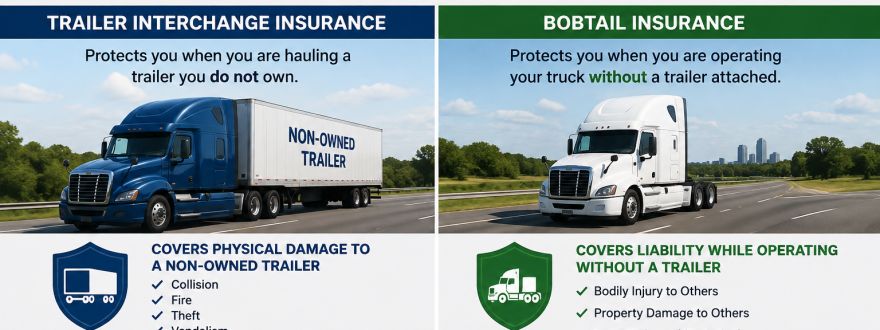
Trailer interchange insurance helps protect a trailer you do not own while it is in your possession under a qualifying trailer interchange agreement.
In the trucking industry, drivers and motor carriers don't always pull trailers they own.
You may pick up and transport a trailer belonging to another motor carrier, shipper, or trucking company.
If you're responsible for that non-owned trailer and it is damaged while in your possession, your normal tractor physical damage coverage may not provide the protection you expect.
That's where trailer interchange coverage may come into play.
What Can Trailer Interchange Insurance Cover?
Depending on the insurance carrier and policy, trailer interchange coverage may provide protection against covered physical damage to a non-owned trailer in your possession.
Covered causes of loss may include things such as:
-
Collision
-
Fire
-
Theft
-
Vandalism
-
Certain other covered physical damage losses
Coverage varies by insurance company and policy, so truckers should always review the actual terms, limits, deductibles, and exclusions.
Example of Trailer Interchange Coverage
Imagine you own your tractor but are pulling a $50,000 trailer belonging to another trucking company under a trailer interchange agreement.
You are involved in an accident and the borrowed trailer is severely damaged.
Your tractor's physical damage coverage protects your insured equipment according to your policy, but you don't own the damaged trailer.
Trailer interchange coverage may help pay for covered damage to that non-owned trailer, subject to your policy limit and deductible.
Without the proper coverage, you could potentially be responsible for the damage yourself.
Who Should Consider Trailer Interchange Insurance?
You may need trailer interchange coverage if your trucking business:
-
Regularly pulls trailers owned by other companies
-
Exchanges trailers with other motor carriers
-
Has contracts making you responsible for non-owned trailers
-
Operates under trailer interchange agreements
-
Is required by a motor carrier, broker, or other contracting party to maintain the coverage
If you're pulling someone else's trailer, don't automatically assume your existing truck insurance covers it.
What Is Bobtail Insurance?
Bobtail insurance generally refers to liability protection when you're operating your tractor without a trailer attached.
This can be particularly relevant for owner-operators who are permanently leased to a motor carrier.
For example, you finish delivering a load and disconnect your trailer. You then drive the tractor without a trailer attached.
Depending on your insurance arrangement and the circumstances, your motor carrier's primary liability policy may not provide coverage for every situation in which you're operating the tractor.
Bobtail liability is designed to address certain liability exposures while the tractor is being operated without a trailer attached.
Example of Bobtail Insurance
Imagine you've dropped your trailer and are driving your tractor without a trailer attached.
While driving, you cause an accident that injures another driver and damages their vehicle.
If the accident falls within the coverage provided by your bobtail policy, bobtail liability insurance may help cover your legal liability for the other person's bodily injury or property damage, subject to the terms and limits of your policy.
Bobtail insurance is about liability.
Trailer interchange insurance is about physical damage to someone else's trailer.
That's the major difference.
Trailer Interchange vs. Bobtail Insurance: The Easy Way to Remember It
Here's a simple way to think about these two coverages:
Trailer Interchange = The Trailer
You're pulling a trailer you don't own and need protection for covered physical damage to that trailer.
Bobtail = Liability Without the Trailer
You're driving your tractor without a trailer attached and need liability protection for qualifying situations.
These policies solve two completely different insurance problems.
Is Bobtail Insurance the Same as Non-Trucking Liability?
Not necessarily.
The terms bobtail insurance and non-trucking liability insurance are sometimes used interchangeably in casual conversation, but they can mean different things depending on the insurance carrier and policy.
Bobtail coverage generally focuses on operating the tractor without a trailer attached.
Non-trucking liability may instead focus on whether the vehicle is being operated for a non-business or personal purpose.
Because policy definitions vary, don't purchase coverage based solely on the name.
Ask your insurance agent exactly when the coverage applies and when it does not.
What About Unladen Liability?
Truckers may also hear the term unladen liability.
This is another coverage that shouldn't automatically be assumed to mean the same thing as bobtail insurance.
Depending on the policy, unladen liability can provide liability protection while operating without cargo, which may include situations where the tractor has no trailer attached or has an empty trailer attached.
This is another reason trucking insurance can become confusing.
Bobtail, non-trucking liability, and unladen liability can address different situations.
Do Owner-Operators Need Bobtail Insurance?
It depends on how you operate.
If you're an owner-operator permanently leased to a motor carrier, your lease agreement may specify the secondary liability coverage you're required to carry.
You should review your lease agreement carefully to determine:
-
What liability insurance the motor carrier provides
-
When the motor carrier's coverage applies
-
What coverage you're responsible for purchasing
-
Whether bobtail, non-trucking, or unladen liability is required
-
Required liability limits
If you operate under your own authority, your insurance needs may be different.
Do I Need Trailer Interchange If I Own My Trailer?
If you only pull trailers you own and insure, trailer interchange coverage may not be necessary.
However, if you sometimes pull trailers belonging to another company, you should discuss that exposure with your insurance agent.
Don't wait until a borrowed trailer is damaged to find out whether it was insured.
Can I Need Both Bobtail and Trailer Interchange Insurance?
Yes.
A trucker could potentially have exposures requiring both types of coverage.
For example, during your normal operation you may:
-
Pick up and pull a trailer belonging to another company.
-
Deliver the load.
-
Return or drop the trailer.
-
Drive your tractor without a trailer attached.
Trailer interchange coverage may be relevant while you're responsible for the non-owned trailer.
Bobtail coverage may become relevant when you're driving the tractor without a trailer attached, depending on your policy and operating arrangement.
One does not replace the other.
Other Trucking Insurance Coverage You May Need
Trailer interchange and bobtail insurance are only two pieces of a trucking insurance program.
Depending on your operation, you may also need:
-
Primary auto liability
-
Motor truck cargo insurance
-
Physical damage insurance
-
General liability
-
Non-trucking liability
-
Unladen liability
-
Occupational accident coverage
-
Workers' compensation
-
Commercial umbrella or excess liability
Your insurance should be structured around how your trucking business actually operates, not simply around the cheapest policy available.
Commercial Truck Insurance in Acworth, GA
If you're looking for commercial truck insurance in Acworth, Georgia, Jones Group Insurance Services can help you evaluate your trucking operation and determine which coverages may be appropriate.
Commercial Truck Insurance in Kennesaw, GA
We assist owner-operators and trucking companies looking for truck insurance in Kennesaw, GA, including liability, physical damage, cargo, and other trucking-related coverage.
Commercial Truck Insurance in Marietta, GA
If you're searching for commercial trucking insurance in Marietta, Georgia, we can help review your current coverage and identify potential gaps based on how you operate.
Commercial Truck Insurance in Canton, GA
Jones Group Insurance Services helps trucking businesses looking for commercial truck insurance in Canton and Cherokee County compare available insurance options.
Commercial Truck Insurance in Woodstock, GA
If you're an owner-operator or trucking company looking for truck insurance in Woodstock, Georgia, we can help you understand your liability, trailer, cargo, and physical damage exposures.
Commercial Truck Insurance in Atlanta, GA
We also assist trucking businesses searching for commercial truck insurance in Atlanta, Georgia, as well as businesses operating throughout the state.
Truck Insurance Throughout Georgia
Your trucking business may operate far beyond the city where it's based.
That's why Jones Group Insurance Services works with eligible trucking risks throughout Georgia.
Whether you operate one truck or multiple commercial vehicles, we'll take the time to understand:
-
Who owns your tractors
-
Who owns the trailers you pull
-
Whether you're leased to a motor carrier
-
Whether you operate under your own authority
-
What you're hauling
-
Where you operate
-
Which coverages your contracts require
Don't Find Out You're Missing Coverage After an Accident
Trucking insurance can be complicated because different policies protect different exposures.
Remember:
Trailer Interchange Insurance: Helps protect qualifying non-owned trailers in your possession.
Bobtail Insurance: Provides certain liability protection while operating your tractor without a trailer attached.
Primary Liability: Protects against your legal liability to others while operating under applicable commercial trucking operations.
Physical Damage: Helps protect your insured truck or equipment against covered physical damage.
Having one of these coverages does not necessarily mean you have the others.
Looking for Commercial Truck Insurance in Georgia?
At Jones Group Insurance Services, we help truckers and trucking businesses understand what they're buying before a claim happens.
If you're looking for commercial truck insurance, bobtail insurance, trailer interchange coverage, motor truck cargo insurance, or trucking liability insurance in Acworth, Kennesaw, Marietta, Canton, Woodstock, Atlanta, or throughout Georgia, we're here to help.
Request a Georgia Commercial Truck Insurance Quote
Not sure whether you need trailer interchange, bobtail, non-trucking liability, or another type of trucking insurance?
Contact Jones Group Insurance Services today for a commercial trucking insurance quote.
We'll review how you operate and help you explore coverage options designed to protect your truck, your business, and your livelihood.